







































Difficult environment: Conventional seals are reaching their limits
NGL processes primarily pump light hydrocarbons (i.e. ethane and propane). In other processes, liquid CO2 is pumped. Temperature and pressure fluctuations can cause phase transitions between liquid and gas in conjunction with the low vapor pressure margin of the medium at the sealing surfaces. The consequential dry run will damage the mechanical seal and result in seal failure.
n additional cause of failure occurs for standby pumps: pump and seal are often under full pressure for long periods of time (sometimes for months). When the pump is started, the sliding faces of the seal come into direct contact with each other, run dry, and can be damaged or even destroyed in consequence.
Always better: DF-(P)DGS6 can do more than others
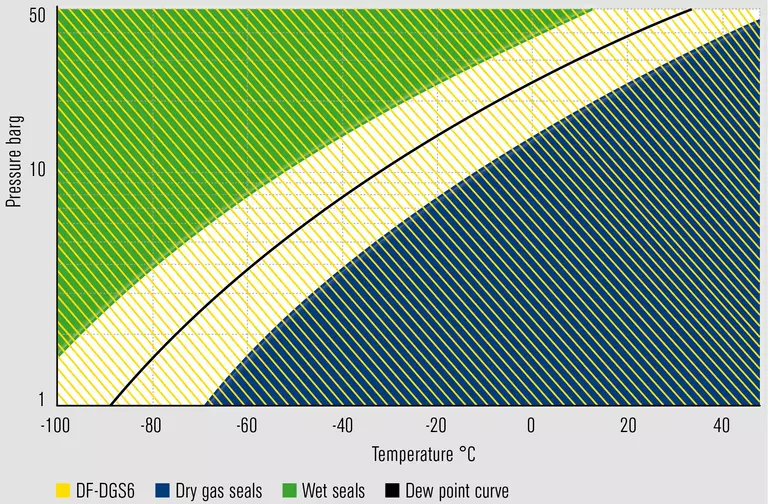
Due to its broad and structured seal faces, the DF-(P)DGS6 runs contact-free and can operate in both modes: gas-lubricated as well as liquid-lubricated. And above all: the sealing system is extremely reliable. In addition to the robust design is the unique diamond bonding of EagleBurgmann: DiamondFace.