







































Sealing expertise for applications in the alternative fuels production

Alternative fuels, bringing climate protection and transport together
The world's population continues to grow, and with it the volume of traffic worldwide. At the same time, our mobility and the transport of goods are predominantly based on the combustion of fossil fuels, which is why the transport sector accounts for a significant proportion of climate-damaging emissions.
The urgent need to decarbonize our society therefore requires the development of alternative solutions. Biofuels can help to meet the large demand for fuel and at the same time achieve the climate targets.
On the way to a climate-friendly mobility and logistics
Decarbonizing the transport sector is one of the EU's cornerstones for ensuring sustainable mobility in Europe. But this topic is also high on the agenda in other parts of the world. More and more companies are offering technologies and services aimed at low-carbon solutions.
In terms of climate policy in Europe, a continuous shift from conventional petroleum refineries to biorefineries is already taking place by switching from high-carbon fuels to low-carbon or carbon-free fuels. These fuels are classified as biogenic, synthetic fuels or e-fuels made from green hydrogen and carbon capture processes.
EagleBurgmann, trusted sealing solutions partner to the alternative fuels industry
In the production of biogenic or synthetic fuels, the plant and machinery must cope with different operating conditions and challenges. Industrial seals on the machines and pumps play a key role in how efficiently and safely everything works.
As one of the world’s leading manufacturers of industrial sealing technology, EagleBurgmann is a reliable solution and project partner for all companies investing in, planning, and working on green energy projects.
In addition to our wide range of products and solutions for pumps, mixers and compressors we offer valuable technical support globally. We adapt proven standard sealing solutions to individual requirements in accordance with API 682 and other standards. However, the development of new sealing solutions and systems is also possible.
Biofuels Bioethanol, Biodiesel, HVO


Biofuels have already been playing an important role in the reduction of greenhouse gases from the transport sector for several years. They are produced from plant material (biomass) that has an increased energy density.
Biofuels of the so-called first generation are mainly produced from the fruit of plants, most of which can be used as food and feed. “Advanced biofuels” of the new generation are made from different non-food biomass. These are, for example, woody crops, agricultural residues, or domestic and industrial waste.
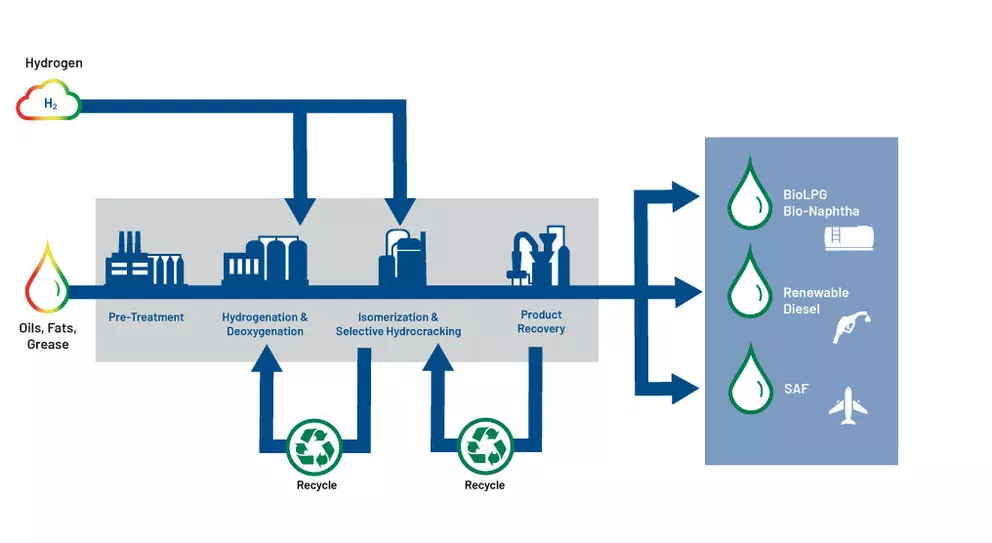
The two most common types of biofuels are bioethanol and biodiesel. Recently however, renewable diesel, also known as HVO or green diesel has also become increasingly available.
Bioethanol is an alcohol made by fermentation, usually from carbohydrates from sugar or starch crops such as corn and sugar cane. Ethanol can be used in its pure form (E100) as a fuel for vehicles but is usually used as a gasoline additive to increase octane and improve vehicle emissions.
Biodiesel is produced from oils or fats by esterifying fatty acids with methanol. It can be used in its pure form (B100) as a fuel for vehicles but is usually used as a diesel additive to reduce par-ticulate matter, carbon monoxide and hydrocarbon levels in diesel vehicl
HVO stands for Hydrogenated Vegetable Oils and is a biofuel produced by hydrogenation pro-cesses from renewable raw materials such as vegetable oils, industrial waste, and by-products (tall oil, fats) and used cooking oils (UCO).
Sustainable Aviation Fuel (SAF)

Sustainable Aviation Fuel / SAF is up to 80% lower in emissions than fossil fuel and is therefore an important building block for reducing emissions in aviation.
This alternative fuel is not refined from crude oil, but from sustainable sources such as waste oil, agricultural residues, and synthetic resources. It has the same properties and specifications as conventional aviation fuel and is used as a so-called "drop-in" SAF, i.e. mixed with fossil kerosene up to a maximum of 50 percent.
SAF can be produced using either the HEFA/HVO process or the power-to-liquid process, which uses renewable energy, green hydrogen, and carbon capture from biomass processes.
Your expert partner for projects of any size
EagleBurgmann has been a reliable full-service partner to the fuel industry for many years. This allows us to follow current developments and, as a solution partner, be part of the journey towards a sustainable fuel supply. We support alternative fuel projects with in-depth know-how and supply the appropriate sealing technology as required.
Benefit from our many years of experience and detailed technical knowledge in industrial sealing technology.
Our project engineers will be happy to support you.
Would you like personal advice, do you have any questions or would you like to order directly? We look forward to supporting you.

