






































Sealing solutions for critical media
Large volumes of ammonia, chlorine, alkalis and acids are required as basic chemicals for fertilizers and cleaning agents, for example. Production is a continuous process, often in an interconnected system. Pumps and compressors are the predominant machines.
The sealing technology requirements for inorganic chemicals are greatly determined by the properties of the process media. A high solids content, a strongly corrosive effect, or a tendency to crystallize requires specific structural designs and measures to optimize the mode of operation in addition to resistant materials.
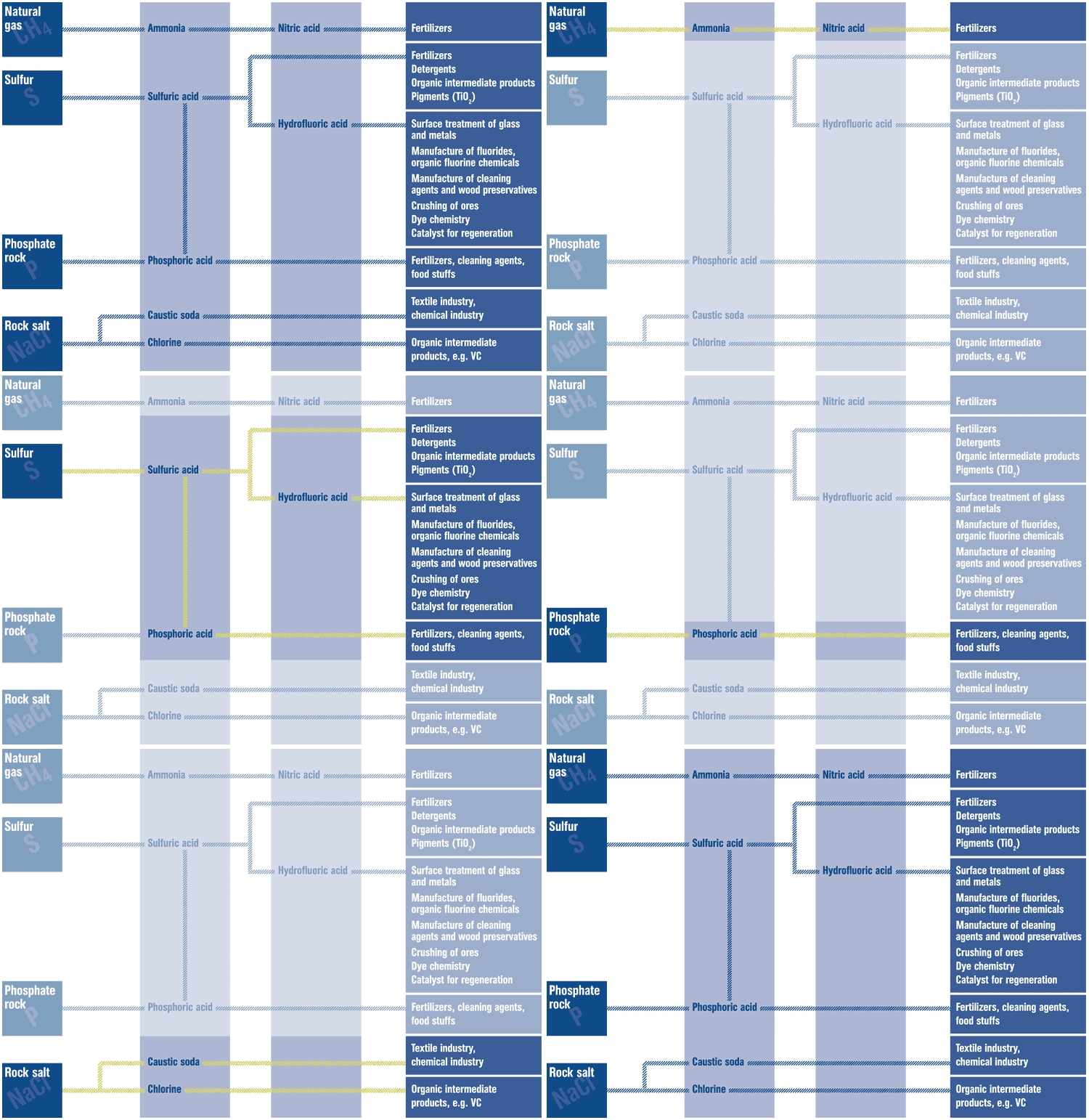
Starting material and end products in inorganic chemicals
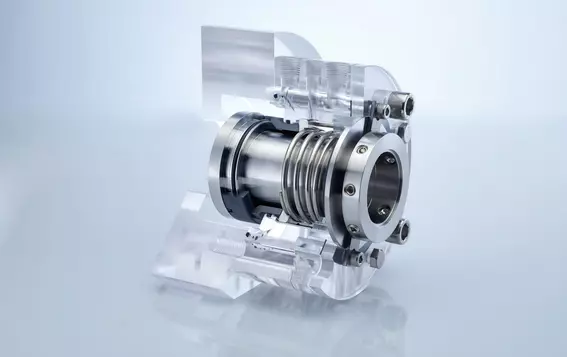
In a chemical plant in Japan, a pump is used to transport molten sulfur. Crystallized sulfur in the area of the shaft seal led to contamination and enormous maintenance costs. Since retrofitting to the EagleBurgmann SulfurAce mechanical seal with an integrated QS300 quench seal, the pump offers optimal availability. The working environment is clean and employees are secure from hazardous substances.
Read on for the entire case study.
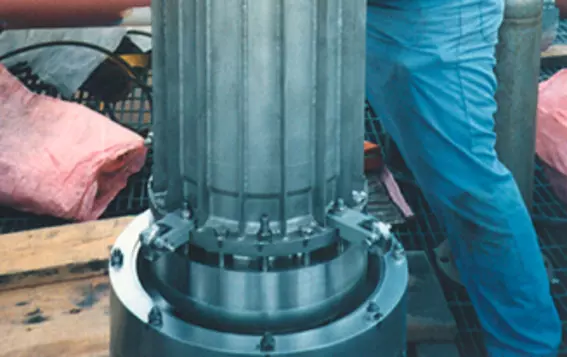
The high-efficiency NMB-16P-2R-45-SC magnetic coupling as a hermetic seal in a vertical pump. The process medium – a mixture of ammonia and propane – has very poor lubricating properties. The low temperature (-45 °C (-49 °F)) plays a decisive role in the choice of materials.
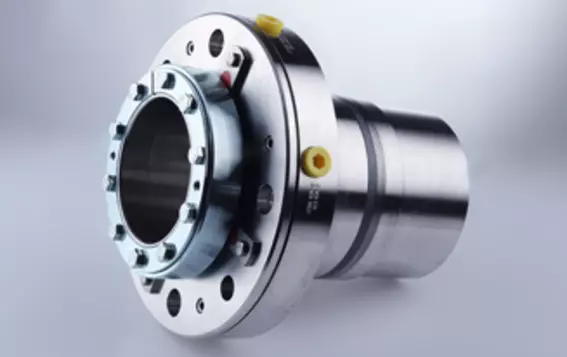
During the production of ammonia, carbon dioxide is removed from the process with Benfield solution – an aqueous potassium carbonate solution with diethanolamine. HJS1 type mechanical seals have proven to be best for sealing the pumps in this area.
Typical operating conditions: p = 2 … 4 bar (29 ... 58 PSI), t = 100 … 150 °C (212 ... 302 °F), n = 1,500 min⁻¹.
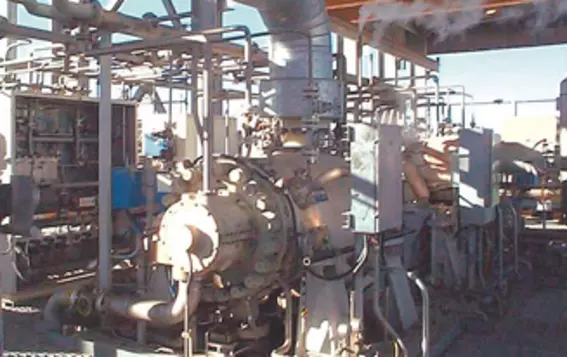
A DGS11.1 seals a compressor in the fertilizer production facility at Incitec Pivot Limited in Australia. In addition, Espey WD400 nitrogen-buffered carbon floating ring seals are used to seal the bearings. The process medium is a mixture of hydrogen and nitrogen. The seal is designed for frequent slow roll operation when starting and stopping the machine.
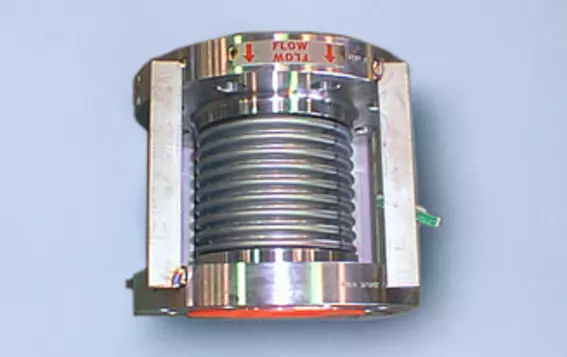
Expansion joints are applied in the processing of anhydrite at GBC Gulf Bayport Chemicals LP in Pasadena, TX, USA.
Operating conditions: p = 3.1 bar (45 PSI), t = 260 °C (500 °F).
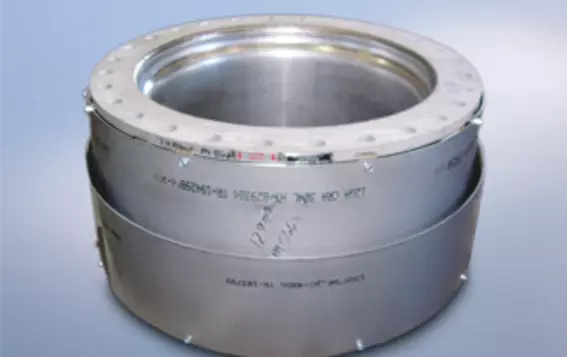
The Columbian Chemicals production facilities in Centerville, LA, USA have a number of expansion joints installed in the exhaust gas system.
Operating conditions: p = 0.35 bar (5 PSI), t = 760 °C (1,400 °F).
Would you like personal advice, do you have any questions or would you like to order directly? We look forward to supporting you.